

Floodwaters rising over one meter—and in some areas up to two meters—have submerged many of central Vietnam’s most famous heritage sites in Hue Imperial City and Hoi An Ancient Town on the morning of October 28.

Over the past two days, heavy rainfall combined with floodwater flowing downstream from the Huong (Perfume) River has inundated large parts of Hue. Many historical landmarks are now under two meters of water. Although the river’s water level peaked last night, it has been receding slowly, leaving much of the Imperial City still submerged by more than one meter.

The Flag Tower (Ky Dai) and nearby landmarks such as Phu Van Lau and Nghenh Luong Pavilion have been completely surrounded by water. Floodwaters have also swept through Quang Duc Gate, one of the ten main entrances to the Imperial Citadel.

In front of Ngo Mon Gate, water levels have reached about 1.5 meters. Heavy rain has also flooded the Trung Dao Bridge, which crosses Thai Dich Lake leading to Thai Hoa Palace.

At noon on October 27, the Hue Monuments Conservation Center temporarily closed all sites to visitors for safety reasons and began implementing measures to protect and reinforce the historic structures.

Flooding around the Hue Imperial Citadel has reached more than half a meter, while nearby streets such as Le Huan and Dang Thai Than are submerged 1 to 1.5 meters deep. Water has overflowed the moat system, inundating many interior structures, including the The Mieu Temple, located in the southwest corner of the Citadel, where ten emperors of the Nguyen Dynasty are worshipped.
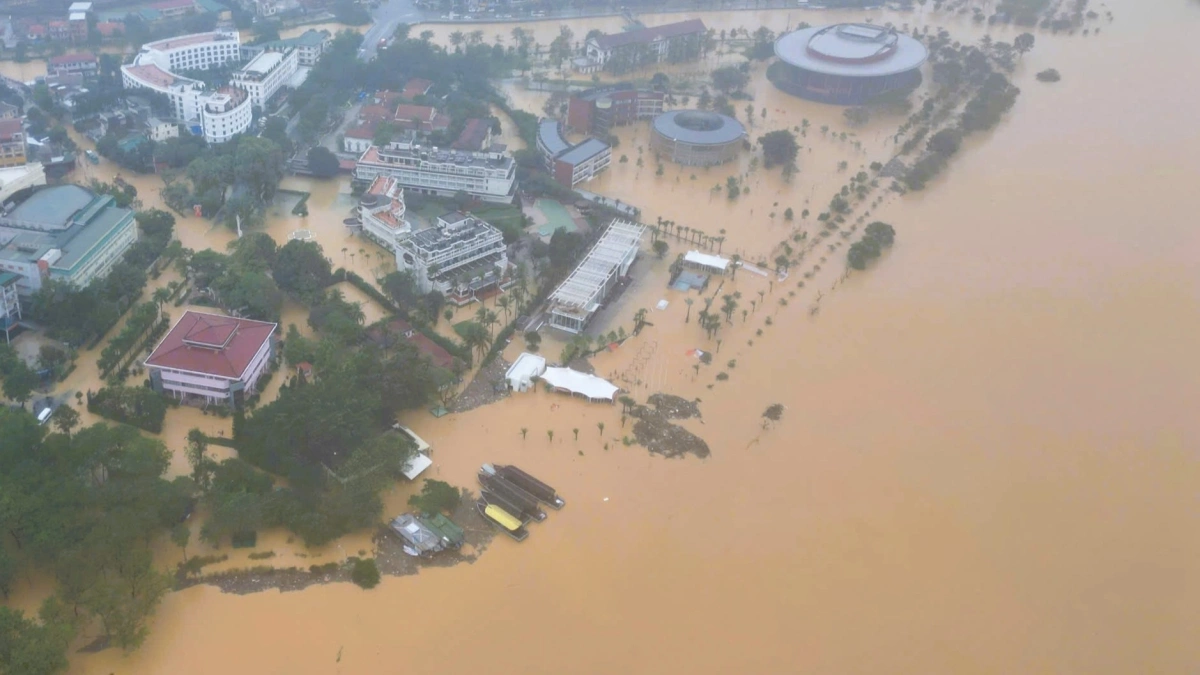
Hotels and restaurants near the Da Vien Islet area have also been engulfed. Since the night of October 26, several hotels mobilized vehicles to evacuate guests to safer locations.

Part of the Azerai La Residence Hotel, a colonial-era building constructed in 1930 along the Perfume River, now sits underwater.
In Hoi An, heavy rainfall since yesterday afternoon caused the Hoai River to rise nearly half a meter above the second warning level. Although the rain eased this morning, water receded slowly, leaving the riverside pedestrian streets—normally the busiest area of the Ancient Town—still deeply flooded.
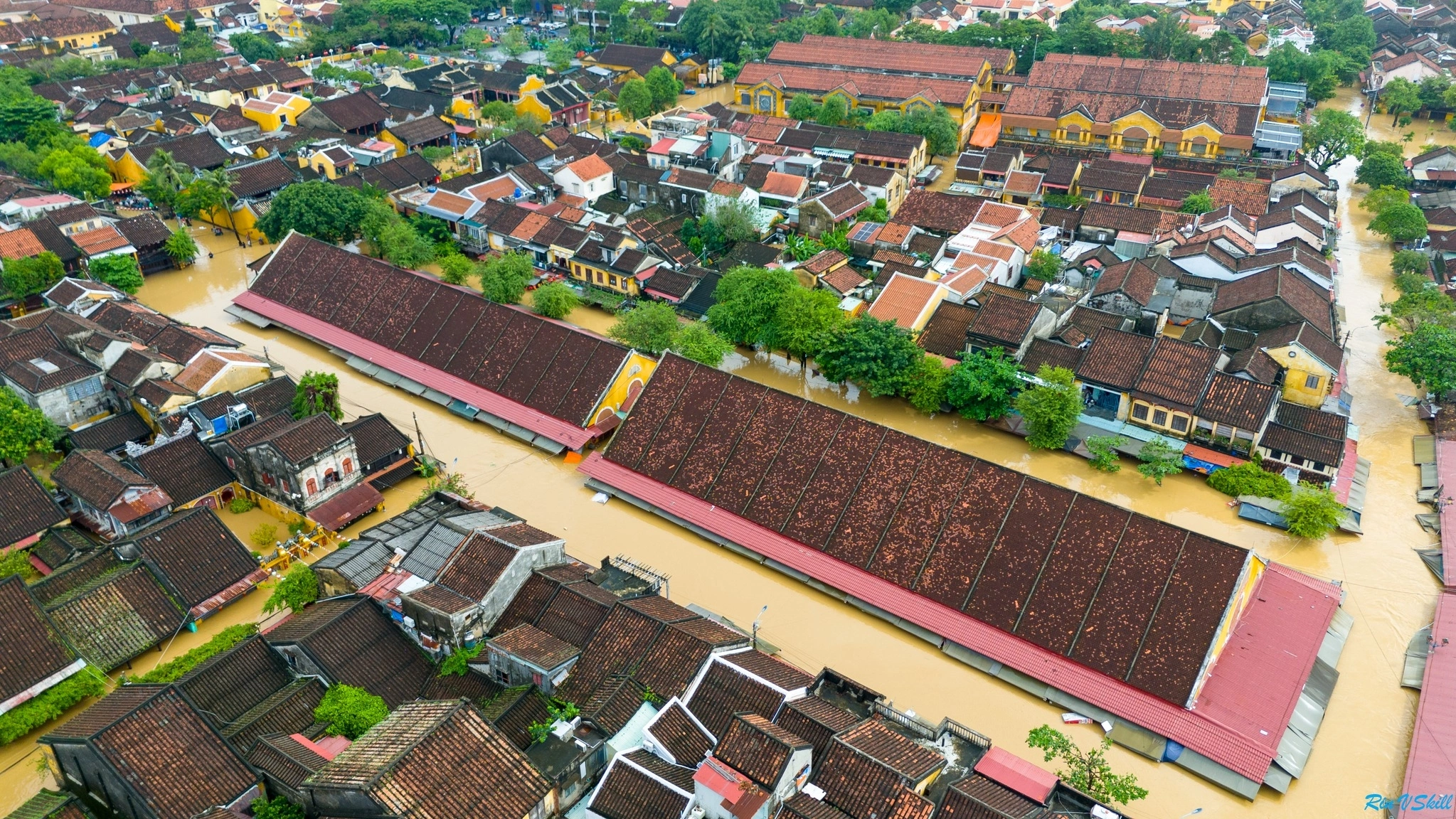
The Hoi An Central Market, located along Tran Phu and Bach Dang streets, with one side facing the Hoai River, is under about half a meter of water. Streets such as Phan Chu Trinh and Hai Ba Trung, about 500 meters from the river and known for their many cafés and photo spots, remain about one meter deep. Tourists in these areas have been safely evacuated.
Several hotels have assisted guests in adjusting travel plans, arranging transport to other destinations such as Da Lat and Quang Binh, and providing meals for those remaining in Hoi An during the floods.
Floodwaters have surrounded the entire Ancient Town, and both residents and visitors are now traveling by boat. Many tourists have chosen to stay, describing the experience as “living through the flood,” rather than rescheduling their trips.
Due to the combined effects of a cold air mass, a tropical convergence zone, and strong easterly winds, heavy rains have affected central Vietnam since the night of October 23, intensifying from October 25 onward. Between the evening of October 24 and this morning, rainfall in Hue reached 500–700 mm, with some areas recording over 1,000 mm—including Bach Ma Peak (2,785 mm), Khe Tre (1,484 mm), and Huong Son (1,270 mm). In Da Nang, rainfall reached 903 mm in Phuoc Thanh and 879 mm in Phuoc Chanh.
According to the National Center for Hydro-Meteorological Forecasting, heavy rain is expected to continue across central Vietnam until the end of October. From now until the morning of October 29, rainfall in areas from southern Quang Tri to Da Nang and eastern Quang Ngai is forecast to range between 200–400 mm, with localized areas exceeding 700 mm.